Dry Eyes Treatment
in Lucknow
Dry eye disease occurs when the eyes do not produce enough tears or when tears evaporate too quickly. Tears keep the eyes moist, nourish the ocular surface, and protect clear vision from irritation, burning, and strain.
What Is Dry Eye Disease?
Dry eye disease occurs when the tear film does not provide enough moisture or protection to the eye surface. As a result, the eyes may feel dry, irritated, or uncomfortable.
Tears are not just water; they form a complex, multi-layered protective shield over the cornea. When tear quantity diminishes or tear composition is disrupted, the delicate ocular surface becomes vulnerable to environmental exposure, screen strain, and chronic friction during every blink.
How Healthy Tears Protect the Eye Surface
A balanced tear film continuously lubricates the eye, washes away foreign particles, and maintains a smooth optical surface for clear vision.
What Can Contribute to Dry Eyes?
Dry eye disease can stem from multiple lifestyle, environmental, and physiological factors identified during clinical evaluation.
Reduced Tear Production
When the lacrimal glands fail to generate an adequate volume of watery tears, the eye surface dries out quickly. This condition is commonly associated with aging, hormonal changes, auto-immune conditions, or certain medications.
Long Screen Time
Extended hours on computers, smartphones, and tablets significantly lower blink frequency. Fewer blinks allow tears to evaporate rapidly, leaving the ocular surface exposed to air and causing fatigue, redness, and intermittent blur.
Contact Lens Use
Prolonged or daily contact lens wear can absorb natural tears and alter tear distribution across the cornea. This often leads to lens discomfort, foreign body sensation, and increased dry eye symptoms by the end of the day.
Air Pollution and Dust
Urban air pollutants, suspended particulate matter, dry air, wind, and air conditioning accelerate tear evaporation and provoke surface inflammation. This creates a persistent sensation of grit and burning.
Meibomian Gland Dysfunction (MGD)
The meibomian glands along the eyelid margins produce the vital oily layer that prevents tears from evaporating too fast. When these glands become clogged or inflamed, evaporative dry eye develops.
Excessive Tearing (Reflex Tears)
Paradoxically, dry eyes can cause eyes to water excessively. When the corneal surface becomes dry and irritated, the brain triggers a surge of emergency reflex tears. However, these lack the necessary oils and quickly roll away without soothing the surface.
Post-Concussion Visual Issues
Head injuries, concussions, or prolonged neurological strain can disrupt autonomic blink reflexes, accommodation, and ocular motor coordination, leading to increased eye strain and ocular surface drying.
Digital Screens Can Change the Way We Blink
Long hours on computers, smartphones, and tablets can increase eye strain and dryness. People tend to blink less frequently while focusing on digital displays, which allows tears to evaporate much faster.
In addition to reduced blink rates, many digital blinks are incomplete—meaning the upper and lower eyelids do not meet fully, leaving the lower portion of the cornea perpetually unlubricated. Over time, this leads to computer vision syndrome and ocular fatigue.
When reading or looking at backlit screens, intense visual focus suppresses the spontaneous blink mechanism from normal frequency down to minimal intervals.
How Can Dry Eyes Feel?
Dry eye symptoms can range from subtle afternoon fatigue to persistent irritation that interferes with reading, driving, and work.
DRYNESS
A scratchy, gritty sensation as if sand or a foreign particle is stuck in the eye, especially upon waking or after long screen sessions.
BURNING
A stinging or heated discomfort in the eyes provoked by dry air, wind, air conditioning, or continuous reading.
BLUR
Fluctuating vision that becomes fuzzy during tasks but temporarily clears immediately after blinking.
FATIGUE
Heaviness in the eyelids and tired eyes that make keeping the eyes comfortably open difficult toward the end of the day.
FOCUS DIFFICULTY
Struggling to sustain sharp visual clarity during prolonged computer usage, spreadsheets, or detailed close work.
DISCOMFORT
General ocular redness, reflex watering, sensitivity to bright lights, and contact lens intolerance.
Dry Eye Treatment Depends on the Cause
The right dry eyes treatment in Lucknow depends on the cause and severity of your symptoms. Your eye specialist may recommend simple lubricating drops or advanced procedural care.
Artificial Tears and Lubricating Drops
Artificial tears are commonly used for mild dry eye symptoms. They add essential moisture to the eye surface, replicate natural tear hydration, and can provide temporary relief from daily strain.
- Easy to use
- Immediate relief
- Widely available
Medicated Eye Drops
Moderate or severe dry eye may require prescription eye drops, gels, or ointments. These targeted treatments help control underlying inflammation, stimulate natural tear production, and improve the cellular health of the eye surface.
- Treats underlying inflammation
- Long-term symptom control
- Suitable for chronic dry eye
Meibomian Gland Dysfunction Treatment
The meibomian glands produce an oily layer that slows tear evaporation. When these glands become blocked or do not work properly, tears evaporate rapidly. In-clinic thermal and expression therapies clear blocked gland orifices to restore natural lipid secretion.
- Improves tear stability
- Reduces evaporation
- Long-lasting relief
Advanced Dry Eye Treatment
Patients with persistent or severe symptoms may require detailed diagnostic testing of the tear film and ocular surface. Advanced protocols combine gland therapy, punctal occlusion, anti-inflammatory regimens, and customized maintenance plans.
- Precise diagnosis
- Customized treatment plans
- Better outcomes in chronic cases
Dry Eyes Treatment Cost in Lucknow
The dry eyes treatment cost in Lucknow varies from one patient to another. The total cost depends on the cause, severity, diagnostic tests, and chosen treatment method.
Artificial Tears & Lubricants
Medicated Eye Drops
MGD Gland Therapy
Advanced Care Protocol
What Affects the Treatment Cost?
Severity of Dry Eye
Basic therapy should be given for mild dry eye, while long-term medical or procedural care is necessary for moderate to severe symptoms.
Type of Dry Eye
Aqueous-deficient dry eye (reduced tear production) and evaporative dry eye (oil layer breakdown) require distinctly different clinical treatment approaches.
Diagnostic Tests Used
Advanced testing, including tear breakup time (TBUT), meibomian gland imaging, and ocular surface evaluation, influences the overall diagnostic plan.
Experience of the Eye Specialist
Skilled ophthalmologists and optometrists provide accurate diagnosis and tailored treatment for reliable, long-term ocular relief.
How Do You Choose the Right Dry Eye Treatment Centre?
Don’t just concentrate on cost while searching for dry eyes treatment in Lucknow. Selecting the appropriate eye care facility will yield long-term relief and avoid recurrence.
Expertise in Dry Eye Management
Doctors experienced in distinguishing between aqueous deficiency and evaporative tear-film disorders.
Availability of Advanced Diagnostic Equipment
State-of-the-art tear film testing, meibomian gland assessment, and corneal surface examination.
Customized Treatment Plans
Therapy tailored specifically to your eye condition, occupation, and daily screen exposure.
Experience with Chronic & Computer-Related Dry Eye
Specialized management protocols for screen professionals, IT workers, and chronic dry eye sufferers.
Patient Education & Lifestyle Guidance
Empowering patients with actionable blink habits, environmental adjustments, and eyelid hygiene regimens.
Transparent Pricing & Insurance Coverage
Clear financial policies ensure you understand treatment costs upfront without hidden fees or unexpected charges.
Transparent Pricing
At Klarity Eye Care, we believe that understanding your treatment costs prior to therapy is essential for peace of mind. Selection of the appropriate eye care facility will yield long-term relief and avoid recurrence.
Every patient receives a thorough explanation of recommended diagnostic tests, prescribed medications, and procedural options with itemized estimates.
Insurance Coverage for Dry Eye
Routine dry eye treatment is generally considered an outpatient service. Therefore, many health insurance plans may not cover standard consultations, lubricating eye drops, or routine maintenance care.
Patients are advised to:
- Verify coverage parameters with their insurance provider
- Request detailed bills and formal clinical prescriptions
- Enquire at clinics regarding treatment package options
What Can You Expect During Dry Eye Treatment?
Dry eye treatment begins with a detailed eye examination. The doctor reviews your symptoms and checks the condition of the eye surface before customizing your care plan.
Initial Evaluation
30–60 minutes: Complete symptom review, tear breakup time (TBUT), and ocular surface evaluation.
Symptom Relief
Within 1–2 weeks: Noticeable reduction in burning, scratchiness, and eye irritation with initial therapy.
Follow-Up Visits
Every 3–6 weeks: Monitoring tear stability, assessing response, and fine-tuning medication dosage.
Lifestyle Guidance
Ongoing: Screen break habits, adequate hydration, and daily eyelid hygiene protocols.
Duration of Effect
Up to 2–3 months: Sustained comfort with regular treatment for dry eyes in Lucknow.
* Note: Individual timelines and response to dry eye treatment can vary depending on cause and severity.
Everyday Habits That Protect Your Tear Film
Recommendations for lifestyle modification are frequently advised alongside medical care to maintain long-term ocular comfort.
Regular Screen Breaks
Follow the 20-20-20 rule: Every 20 minutes, look at an object 20 feet away for at least 20 seconds to allow natural complete blinking.
Adequate Hydration
Drink plenty of water throughout the day to support the body's natural aqueous tear production and prevent system dehydration.
Eyelid Hygiene
Maintain clean eyelid margins using warm compresses and gentle lid scrubs to keep meibomian gland openings unblocked.
Environmental Awareness
Avoid direct airflow from fans and AC vents toward your eyes, and consider a humidifier in dry, air-conditioned rooms.
* Lifestyle adjustments support tear health but do not replace comprehensive medical evaluation.
When Should You See an Eye Specialist?
Early identification avoids long-term pain, ocular surface damage, and vision complications. See an eye specialist if you experience:
Still have eye irritation, burning, or scratchiness after putting in over-the-counter drops.
Blurred vision interferes with reading, driving, computer work, or daily activities.
Screen-related redness, eye strain, and heaviness continue to worsen over time.
Headaches or eye fatigue frequently occur after visual concentration.
Symptoms progressively worsen over time without lasting relief.
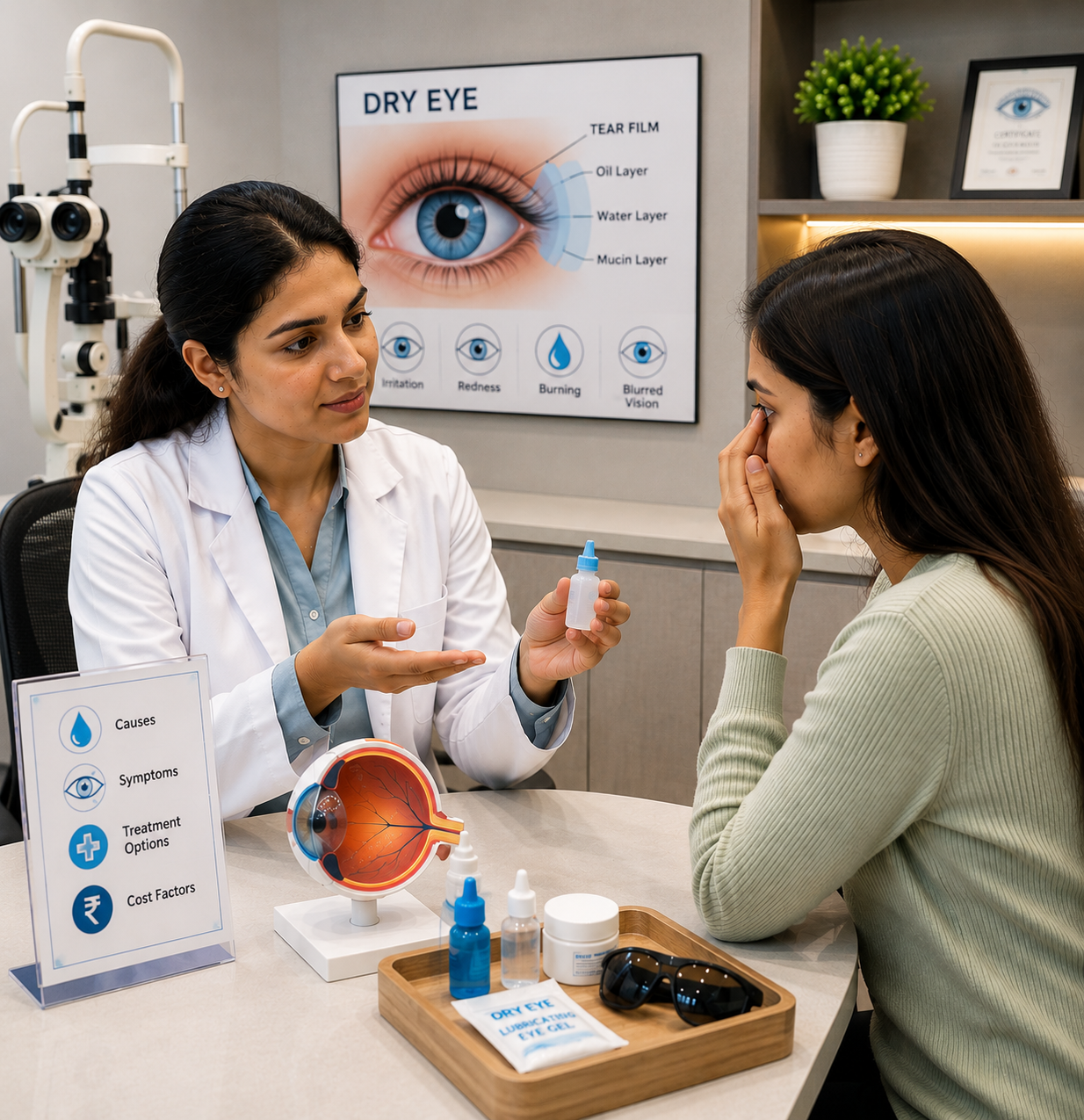
Comprehensive Dry Eye Care in Lucknow
Klarity Eye Care provides comprehensive Dry Eyes Treatment in Lucknow for patients with mild, moderate, and chronic dry eye symptoms.
Our eye specialists thoroughly assess the condition of your eyes and identify the precise causes of dryness. Based on the clinical examination, we recommend a personalized, structured treatment plan.
The centre focuses on advanced diagnosis, personalized care, and long-term eye health. Whether your symptoms are related to screen use, environmental factors, tear-film instability, or eyelid gland dysfunction, proper clinical evaluation guides effective, lasting relief.
Give Your Eyes the Attention and Comfort They Need.
Schedule a comprehensive dry eye evaluation at Klarity Eye Care Hospital in Nirala Nagar, Lucknow. Get accurate tear film diagnostics and a targeted treatment plan.
Book Dry Eye Consultation
Fill out your details to request an appointment slot with our eye specialists.