Best Cornea Treatment in Lucknow
Cornea treatment focuses on diagnosing and managing conditions that affect the clear, dome-shaped surface at the front of the eye — an essential part of focusing light and maintaining clear vision.
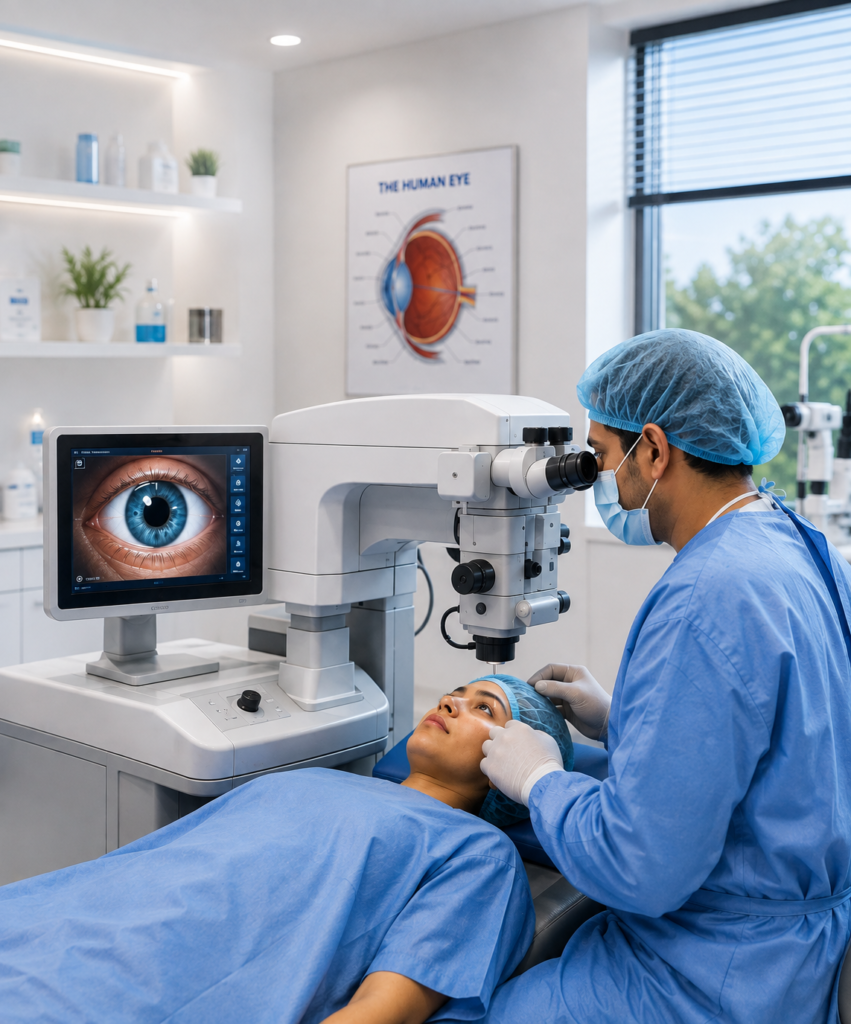
The Clear Surface Behind Clear Vision
The cornea is the primary refracting and protective surface of the eye. It helps focus incoming light and plays an essential role in maintaining sharp, unobstructed vision.
Because the cornea naturally does not possess a direct blood supply, healing and tissue recovery can be slow. Injury, infection, or corneal disorders can rapidly affect eyesight, cause discomfort or pain, and require prompt, expert ophthalmological diagnosis.
Incoming light enters the smooth outer dome.
Cornea provides 65–75% of optical refraction.
Light converges sharply onto the retina.
When the Cornea Needs Attention
The source page identifies seven primary corneal conditions that require precise clinical evaluation and targeted ophthalmological management.
Corneal Infections (Keratitis)
Infections of the cornea caused by bacteria, viruses, fungi, or parasites that cause inflammation, redness, pain, and require rapid antimicrobials.
Corneal Ulcers
Open sores or epithelial defects on the corneal surface, frequently resulting from severe untreated infections, contact lens misuse, or minor physical trauma.
Keratoconus
A progressive condition where the normally round cornea thins and begins to bulge outward into an irregular cone shape, causing distorted vision and high astigmatism.
Corneal Scars & Opacities
Cloudiness or opacity on the transparent surface left after deep injuries, chemical exposure, or past infections that scatter light and impair clear sight.
Dry-Eye-Related Corneal Damage
Chronic surface dryness and micro-abrasions that compromise the delicate corneal epithelium when the ocular tear film is unstable or inadequate.
Corneal Dystrophies
Genetic or structural disorders leading to abnormal material buildup within one or more layers of the cornea over time, gradually affecting transparency.
Post-Surgical Corneal Complications
Corneal swelling, edema, or healing irregularities that occasionally arise following complex intraocular surgeries requiring medical stabilization.
Symptoms Worth Paying Attention To
Because the cornea has a high concentration of sensory nerve endings, corneal conditions often produce distinct warning signals that should not be ignored.
Early diagnosis and appropriate treatment are important for protecting corneal health and reducing the risk of long-term vision problems.
Blurring or Sudden Discomfort
Acute drop in visual clarity, sharp eye pain, or foreign body sensation in one or both eyes.
Persistent Redness & Photophobia
Unresolved ocular redness accompanied by heightened light sensitivity or excessive tearing.
Previous Eye Trauma or Infection
History of scratches, chemical contact, contact lens overwear, or recurring ocular infections.
Progressive Vision Distortion
Frequent prescription changes, irregular halos around lights, or ghost images indicative of Keratoconus.
Treatment Depends on the Condition
Cornea care at Klarity spans conservative medical therapy, specialized collagen stabilization for Keratoconus, and advanced partial- or full-thickness corneal transplantation.
Medical Management of Corneal Conditions
Medicines including targeted eye drops designed for infection and/or inflammation may be used to treat early-stage corneal conditions and facilitate natural epithelial healing.
Source-Supported Advantages:
- Non-Surgical Approach: Conservative outpatient medical therapy without surgical intervention.
- Effective in Early Stages: Highly responsive for acute keratitis, superficial abrasions, and early ulcers.
- Prevents Progression: Prompt pharmacological intervention helps limit deep stromal scarring.
Precision Begins With Better Evaluation
Advanced diagnostic testing assists in precise microscopic diagnosis, curvature mapping, and meticulous pre-treatment surgical planning.
Corneal Topography
High-resolution 3D surface curvature mapping of the anterior and posterior cornea to detect subclinical Keratoconus and irregular astigmatism.
Anterior Segment OCT
Optical coherence tomography providing cross-sectional micrometric visualization of all corneal layers, pachymetry thickness, and stromal depth.
Specular Microscopy
Non-invasive cellular analysis of corneal endothelial cell density, size, and shape to evaluate corneal reserve before and after surgical procedures.
Tear Film & Ocular Surface Assessment
Comprehensive evaluation of tear breakup time, tear meniscus height, and ocular surface health to address dry-eye-related epithelial compromise.
What Determines the Cost of Cornea Treatment?
The source explains that centers with advanced diagnostic and surgical technology may structure fees based on clinical complexity and care requirements.
Characteristics of Disease
Severity, depth of stromal involvement, acute infection vs. chronic degenerative condition.
Treatment Method Chosen
Medication regimens, specialized contact lenses, C3R cross-linking, or corneal surgery.
Technology & Infrastructure
Advanced imaging diagnostics, specular microscopy, operating microscopes, and sterile suites.
Specialist Experience
Ophthalmic subspecialist expertise in external eye diseases and complex keratoplasty.
Approximate Cornea Treatment Cost in Lucknow
Source-Page OverviewMedical Management
Cross-Linking (C3R)
Corneal Transplant
* Cost Disclaimer: Treatment costs shown are approximate ranges from the source page and may vary depending on diagnosis, treatment method, technique, and individual care requirements. Please confirm current pricing with Klarity Eye Care.
Choosing the Right Cornea Care Centre
Corneal tissues require dedicated subspecialty care. The source page recommends evaluating prospective eye centers using seven verified criteria.
Understanding Insurance Coverage
Several health insurance plans in India may provide coverage for corneal surgeries, including corneal transplants, according to specific policy terms and conditions. Coverage depends on the individual policy and its terms.
Waiting Periods & Gaps
Review policy-specific waiting periods for pre-existing conditions and any corneal treatment exclusions before admission.
Donor Tissue & Hospitalization
Validate whether tissue procurement charges, donor processing, and operative room stay are covered under your plan.
Pre-Authorization Requests
Request pre-authorization if required by your insurer prior to planned corneal surgeries to facilitate seamless claims.
Outpatient & Diagnostics
Understand that routine outpatient consultations and preliminary diagnostic scans may not be covered under standard inpatient policies.
What Happens During Cornea Treatment?
Typical source-page timeline for corneal care; actual recovery varies by individual condition, medical response, and surgical modality.
Initial Evaluation
30–60 minutesComprehensive slit-lamp biomicroscopy, corneal topography, staining, and visual assessment.
Medical Response
1–2 weeksInitial response to anti-infective or anti-inflammatory eye drops with interval assessment.
Surgical Recovery
4–8 weeksEpithelial healing and visual stabilization following cross-linking or corneal transplantation.
Regular Follow-Up
OngoingScheduled monitoring to protect corneal clarity, assess endothelial health, and optimize vision.
Physicians typically advise strict medication compliance, wearing protective eyewear / goggles, and observing temporary activity limitations during the healing period to prevent injury and infection.
When Should You See a Cornea Specialist?
Prompt consultation with an ophthalmologist specialized in cornea care is indicated if you experience any of the following clinical signs:
- Blurring or sudden ocular discomfort in one or both eyes
- Persistent redness and heightened sensitivity to light
- Previous eye trauma, scratches, or chemical exposure
- Previous or recurring severe corneal infection
- Progressive vision distortion or rapid change in astigmatism
- Doctor referral for an expert second opinion on corneal disease
Cornea Care in Lucknow
Klarity Eye Care Hospital in Nirala Nagar provides comprehensive cornea diagnostics, medical management, keratoconus cross-linking, and corneal surgical options with experienced ophthalmic specialists.
Clearer Vision Begins With Understanding.
Seek appropriate professional evaluation for corneal concerns. Protect the optical clarity and long-term health of your eyes with the cornea care team at Klarity Eye Care Hospital in Nirala Nagar, Lucknow.
Let's Understand Your Corneal Care Needs.
Share a few details and our clinical team will help you with your appointment request.